Why Siem Reap’s Festivals Feel Like Magic — A Traveler’s Real Story
You know that feeling when a place just gets under your skin? Siem Reap did that to me — not just with temples, but through its festivals. I didn’t expect to dance at a midnight offering or taste sacred rice cakes handed out by monks. This isn’t just tourism; it’s connection. If you’re chasing authentic cultural moments, Cambodia’s festival rhythm will surprise you. Let me show you how to experience it right — respectfully, vividly, and totally unfiltered.
The Pulse of Celebration: Siem Reap Beyond Angkor Wat
Most travelers come to Siem Reap for one reason: Angkor Wat. The silhouette of its lotus-shaped towers at dawn has become an icon of Southeast Asia, drawing millions each year. But beyond the ancient stones and jungle-shrouded ruins lies a living, breathing city pulsing with cultural energy — a rhythm defined not by tour buses, but by festivals. While temple tours offer awe, it’s the seasonal celebrations that reveal the soul of Cambodia.
Siem Reap is not a museum frozen in time. It’s a modern town where tradition and daily life are deeply intertwined. Buddhist practices, agricultural cycles, and ancestral reverence shape the calendar, and every few months, the streets come alive with music, offerings, and communal joy. These festivals are not staged for tourists; they are lived experiences, passed down through generations. For the mindful traveler, attending one is like being invited into a private family gathering — intimate, sincere, and profoundly moving.
Understanding this cultural heartbeat changes how you travel. Instead of ticking off monuments, you begin to align your journey with moments of meaning. You learn that the full moon in September marks a time of remembrance, that November’s river festival celebrates nature’s balance, and that April brings laughter and renewal. Each celebration offers a different lens into Cambodian values: respect, gratitude, resilience, and community. When you time your visit around these events, you shift from observer to witness — and sometimes, with humility, even a participant.
The city’s ability to preserve its traditions while welcoming visitors is a delicate balance. Hotels and tuk-tuk drivers adapt to festival schedules. Markets overflow with seasonal foods. Temples prepare for increased foot traffic. Yet, the core rituals remain untouched by commercialization. This authenticity is rare in today’s travel landscape, where many cultural events have been diluted for mass appeal. In Siem Reap, the festivals remain rooted in purpose, not performance. That’s what makes them magical — they are not shows. They are life.
Pchum Ben: When Ancestors Return and Temples Glow
Of all the festivals in Cambodia, Pchum Ben carries the deepest spiritual weight. Lasting 15 days and culminating on the 15th night of the 10th lunar month, this period is dedicated to honoring ancestors. Cambodians believe that during Pchum Ben, the gates between the living and the dead open slightly, allowing spirits of the departed to return and receive merit from their descendants. The atmosphere is solemn, reverent, and quietly intense — a powerful contrast to the exuberance of other celebrations.
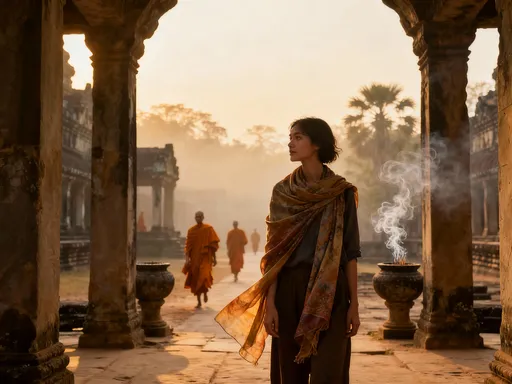
Each morning during the festival, locals rise before dawn to visit pagodas across Siem Reap. Monks chant ancient Pali scriptures, their voices rising in unison as incense coils smoke into the cool air. Families lay out offerings of sticky rice, bananas, and sweet cakes on woven mats near temple gates. These foods are not for the living but for the wandering spirits, believed to gather at the edges of the sacred grounds. The belief is that if a spirit receives enough merit, it may escape suffering and move toward peace.
For travelers, witnessing Pchum Ben is a rare privilege. While the festival is deeply personal, many temples welcome respectful visitors. The key is to approach with quiet awareness. Dress modestly — shoulders and knees covered — and remove your shoes before entering temple buildings. Speak softly, move slowly, and avoid interrupting prayer circles. Photography should be discreet, if allowed at all. Some monks and families prefer not to be photographed during such intimate moments, and it’s essential to honor that boundary.
One of the most touching moments I experienced was during a nighttime offering at Wat Athvea, a quieter temple just outside the city center. As the moon rose, a family lit candles around a small altar, whispering names of loved ones who had passed. A monk placed a bowl of rice at the base of a Bodhi tree, explaining that some spirits are too restless to enter the temple, so offerings are left in nature. I stood at a distance, feeling the weight of the moment — not as a tourist, but as a guest in a sacred space.
Pchum Ben teaches the Cambodian concept of karma and the importance of filial duty. Even those who live far from home make the journey back during this time. For visitors, the lesson is subtler: that travel can be an act of empathy. By observing without intrusion, we learn to listen with our eyes, to feel the presence of history, and to recognize that every culture carries its own way of remembering.
Water Festival (Bon Om Touk): Rivers Alive with Energy
If Pchum Ben is the soul of Cambodia, Bon Om Touk is its heartbeat. Held in November, this three-day festival marks the reversal of the Tonlé Sap River — a natural phenomenon where the river changes direction due to the seasonal monsoon cycle. It’s a moment of ecological wonder, and for Cambodians, a cause for national celebration. In Siem Reap, the festival brings the city’s waterways to life with boat races, music, and nighttime illuminations.
The highlight is the dragon boat races, where teams of 60 paddlers race in long, ornately carved boats shaped like nāgas — mythical serpent beings from Buddhist and Hindu traditions. The energy is electric. Drums beat in rhythm with the strokes. Crowds line the banks of the Siem Reap River, waving flags and cheering. Food stalls overflow with grilled fish, coconut noodles, and sugarcane juice. At night, the river becomes a ribbon of light, with illuminated boats floating downstream like glowing serpents.
While the festival is celebrated nationwide, Siem Reap offers a more intimate experience than the capital, Phnom Penh. The crowds are smaller, the atmosphere more relaxed. Families gather on grassy riverbanks with picnic mats. Children fly kites shaped like birds and fish. Elderly couples sit quietly, watching the water. For travelers, this means easier access to viewing spots and a greater chance to engage with locals in a natural setting.
Still, preparation is key. The final night of the festival draws the largest crowds, and roads near the river can become congested. Tuk-tuks may be hard to find, and some restaurants close early. To make the most of it, arrive early to claim a good spot — the area near the Old Market Bridge is popular but not overcrowded. Bring water, wear comfortable shoes, and consider dining before the festivities begin. If you’re traveling with children, keep them close, as the excitement can make it easy to lose sight of them in the crowd.
Safety is generally not a concern, but it’s wise to stay aware of your surroundings. Pickpocketing can occur in dense crowds, and alcohol consumption increases during the festival. Stick to well-lit areas, avoid isolated paths, and trust your instincts. Many hotels offer shuttle services to and from the river, which can be a convenient and secure option.
Bon Om Touk is more than a party. It’s a celebration of nature’s balance, a thanksgiving for the river that sustains life, and a moment of national unity. For travelers, it’s a chance to feel the pulse of Cambodian joy — loud, proud, and full of life.
Kun Pi Mai — Cambodian New Year Made Personal
When April heat settles over Siem Reap, the city greets it with laughter, water, and renewal. Kun Pi Mai, the Cambodian New Year, is a three-day festival rooted in Buddhist tradition and agricultural cycles. Unlike the commercialized New Year’s Eve parties of the West, Kun Pi Mai feels deeply personal — a time for cleansing, gratitude, and reconnecting with family and community.
The festival begins with a thorough cleaning of homes and temples, symbolizing the removal of bad luck and the preparation for fresh beginnings. Altars are refreshed with flowers, incense, and offerings. On the first day, people visit pagodas to make merit, often bringing food to monks and pouring scented water over Buddha statues — a ritual called Chaul Chnam Thmey. The act is gentle and meditative, a quiet start to the celebrations.
The second day brings playfulness. Streets fill with laughter as children and adults engage in water fights, using sprayers, buckets, and even hoses. But this is not chaos — it’s symbolic. Water represents purification and blessing. To be splashed is to be wished well. At the same time, traditional games like Chol Chhoung (a scarf-tossing game) and Leak Kanseng (a circular singing game) are played in village squares and temple courtyards, keeping ancient customs alive.
The third day is for elders. Younger family members perform Sampeah Kru, a gesture of respect where they bow with palms pressed together and offer gifts of fruit or sweets. This ritual reinforces the Cambodian value of katanyu — gratitude toward those who have guided you. In public spaces, monks receive special meals, and communities gather for shared feasts.
Travelers are often welcomed into these moments. Some guesthouses organize visits to local homes, where guests can join in water blessings or try their hand at traditional games. Public celebrations in Angkor Wat Park and the Old Town square are open to all. The key is to participate with humility. Don’t splash strangers aggressively. Ask before joining a game. Accept a bowl of sticky rice with both hands and a slight bow. These small gestures show respect and open doors to genuine connection.
Kun Pi Mai is not just a holiday — it’s a reset. It reminds us that every year offers a chance to begin again, to honor the past, and to move forward with kindness.
Choosing the Right Time: Matching Your Trip to Festival Rhythms
Planning a trip around festivals requires more than checking a calendar. It means understanding the character of each event and how it aligns with your travel style. Not every festival suits every traveler. A solo adventurer might thrive during Bon Om Touk’s energy, while a reflective traveler may prefer the quiet depth of Pchum Ben. Families with children often find Kun Pi Mai the most engaging, with its playful spirit and inclusive activities.
The Cambodian festival calendar follows the lunar cycle, so dates shift each year. Pchum Ben typically falls in September or October, Bon Om Touk in November, and Kun Pi Mai in mid-April. Other smaller events, like Visak Bochea (Buddha’s birthday) in May, also offer meaningful experiences but with fewer crowds. Researching the exact dates for your intended year is essential, as accommodations in Siem Reap can book up months in advance during peak festivals.
Booking early is not just about securing a room — it’s about ensuring a smooth experience. During major festivals, transportation can be affected. Roads may close for processions. Tuk-tuks and taxis are in high demand. Flights to and from Siem Reap may fill up. If you’re planning to visit Angkor Wat during a festival, consider arriving early in the morning to avoid both crowds and heat. Some temples may have modified hours or restricted access during religious events.
Weather is another factor. April, when Kun Pi Mai occurs, is the hottest month, with temperatures often exceeding 35°C (95°F). Stay hydrated, wear light clothing, and plan indoor or shaded activities during peak heat. November, during Bon Om Touk, is cooler and drier, making it one of the most comfortable times to visit. Pchum Ben falls at the end of the rainy season, so occasional showers are possible, but the misty mornings add to the temple’s mystical atmosphere.
Ultimately, the best festival for you depends on what you seek. Want energy and spectacle? Choose Bon Om Touk. Desire quiet reflection? Pchum Ben may be your moment. Looking for joy and interaction? Kun Pi Mai welcomes you with open arms. Each offers a unique doorway into Cambodian life — all you need is the right timing and a respectful heart.
Respectful Participation: Dos and Don’ts for Meaningful Engagement
Cultural sensitivity is not a checklist — it’s a mindset. In Siem Reap, where tradition runs deep, small actions speak volumes. A traveler who removes their shoes before entering a temple, greets elders with a slight bow, and asks permission before photographing a ceremony is not just following rules. They are building trust.
Start with the basics. Dress modestly, especially at religious sites. Avoid shorts, tank tops, and revealing clothing. When in doubt, observe what locals are wearing and follow their lead. Always remove your shoes before stepping onto a temple platform or entering a home. It’s not just about cleanliness — it’s a sign of respect for sacred space.
Photography requires special care. While many Cambodians are friendly and may smile at your camera, never assume permission. Avoid photographing monks, prayer rituals, or private family moments without asking. If someone shakes their head or turns away, lower your camera immediately. Instead, consider asking your guide or a local contact to help facilitate a respectful exchange. Sometimes, putting the camera down and simply being present creates a more lasting memory.
Physical gestures matter. The traditional Cambodian greeting, the sampeah, involves pressing your palms together in a prayer-like gesture and bowing slightly. While foreigners are not expected to use it constantly, doing so when greeting elders or temple staff is deeply appreciated. Avoid touching people’s heads — considered sacred — and never point with your feet, which are seen as the lowest part of the body.
Finally, understand that not all rituals are for public participation. Some ceremonies are closed to outsiders, and that’s okay. Observing quietly from a distance is often the most respectful way to engage. Your presence, when done with humility, is enough.
I once attended a small village ceremony during Pchum Ben, invited by a local family I’d met through a cooking class. I didn’t speak much Khmer, and I didn’t fully understand every ritual. But by sitting quietly, accepting a bowl of rice with both hands, and bowing in thanks, I was welcomed. That moment — simple, unscripted — meant more than any photo could capture.
Beyond the Festival: Carrying the Spirit Forward
The magic of Siem Reap’s festivals doesn’t end when the last candle is extinguished or the final splash of water dries. It lingers — in the way you greet a stranger, in the patience you show when plans change, in the gratitude you feel for simple moments. These celebrations do more than entertain; they transform.
Travel is often sold as a series of destinations — checklists of sights, experiences, and souvenirs. But festivals remind us that the deepest journeys are not across maps, but within ourselves. They teach us to slow down, to listen, to honor traditions that are not our own. They reveal that joy, grief, renewal, and reverence are universal, even when expressed in different ways.
When you return home, you carry more than photos. You carry a quieter awareness. You remember the monk who smiled as he handed you a rice cake. The child who giggled while soaking you with water. The elder who bowed as you returned the gesture. These moments become part of your story — not as exotic anecdotes, but as human connections.
And perhaps that’s the greatest gift of all: the realization that travel, at its best, is not about escaping your life, but about expanding it. By stepping into the rhythm of another culture, you don’t lose yourself — you find more of who you can be. So as you plan your next journey, don’t just ask where you’ll go. Ask how you’ll engage. With curiosity. With humility. With an open heart. Because the world is full of festivals waiting to be felt — not just seen.