Kobe’s Iconic Spots: Where Sky, Sea, and Steel Come Together
If you’re thinking of Japan, you might picture Tokyo’s neon buzz or Kyoto’s quiet temples—but Kobe? This coastal gem blends modern marvels with old-world charm in ways that genuinely surprise. I didn’t expect to be so moved by its skyline, harbor views, and architectural grit—each landmark telling a story of resilience, beauty, and bold design. From towering observatories to serene shrine gates, Kobe’s iconic structures aren’t just postcard backdrops—they’re gateways to the city’s soul. More than a stopover between Osaka and Kyoto, Kobe stands as a quiet testament to how cities can rebuild, reimagine, and radiate grace under pressure. Its skyline, shaped by sea winds and steel frames, invites travelers to look closer, feel deeper, and connect with a place where every structure has a story.
Why Kobe Stands Out on Japan’s Urban Map
Kobe occupies a unique space in Japan’s urban landscape—a city that refuses to be defined by a single identity. Nestled between the steep slopes of Mount Rokko and the calm waters of Osaka Bay, it has long served as a bridge between Japan and the world. As one of the first Japanese ports opened to foreign trade in 1868, Kobe absorbed global influences while maintaining its cultural core. This duality is visible in its skyline: sleek towers rise beside preserved 19th-century homes, and modern transit systems glide past tranquil Shinto shrines. Unlike the overwhelming scale of Tokyo or the timeless stillness of Nara, Kobe offers a harmonious balance—urban yet livable, international yet distinctly Japanese.
The city’s architectural character was profoundly shaped by the Great Hanshin Earthquake of 1995, a tragedy that destroyed over 100,000 buildings and claimed more than 6,000 lives. Yet from the rubble emerged a renewed commitment to thoughtful design, disaster resilience, and emotional healing through public spaces. Kobe’s reconstruction was not about replicating the past but reimagining the future with sensitivity. Today, its landmarks reflect this journey—structures that are not only functional but symbolic, serving as anchors of memory and hope. This blend of history, innovation, and emotional depth makes Kobe more than a destination; it is a narrative in concrete, glass, and steel.
What sets Kobe apart is its human scale. Even as it rebuilt with modern infrastructure, the city preserved green corridors, pedestrian pathways, and waterfront promenades that invite leisurely exploration. Its skyline is not a fortress of glass but a layered composition—industrial cranes, observation decks, and temple rooftops coexist in surprising harmony. For travelers seeking a deeper understanding of Japanese urban life beyond the usual tourist trails, Kobe offers a compelling case study in resilience, integration, and quiet beauty.
The Must-See: Kobe Port Tower – A Symbol Reborn
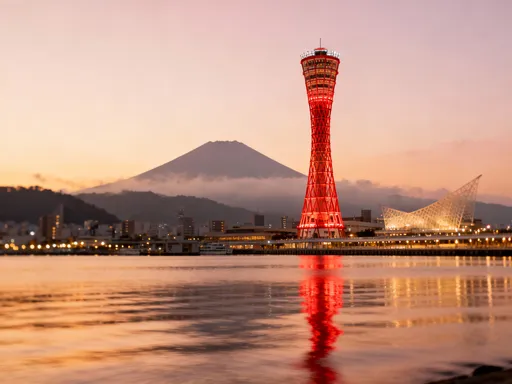
Standing 108 meters tall with a crimson lattice that glows like a traditional taiko drum, the Kobe Port Tower is more than an observation deck—it is a monument to renewal. Completed in 1963, its hyperbolic steel structure was an engineering marvel at the time, designed by chief architect Yoshikatsu Tsuboi to reflect the rhythm and strength of Japanese drumming. The tower’s red color, chosen to symbolize vitality and good fortune, makes it an unmistakable landmark along the harbor. But its significance deepened after the 1995 earthquake, when it remained standing amid widespread destruction, becoming a beacon of endurance for the city.
Today, visitors ascend the tower in a smooth, circular elevator that offers 360-degree views even during the ride. The observation deck at 80 meters provides sweeping panoramas of Osaka Bay, the Akashi Kaikyō Bridge, and the city’s terraced hillsides. The best time to visit is late afternoon, when sunlight gilds the water and the city begins to sparkle with evening lights. On clear days, you can see as far as Awaji Island, a reminder of Kobe’s strategic position in the Seto Inland Sea. At night, the tower itself becomes a light sculpture, its lattice illuminated in seasonal colors—from soft pink during cherry blossom season to deep blue in winter.
Just a short walk from the tower is Harborland, a waterfront district filled with shopping arcades, family-friendly restaurants, and open plazas. It’s an ideal place to unwind after your ascent, with views of illuminated ferries and the rhythmic movement of cargo ships in the distance. To avoid crowds, arrive just before opening at 10 a.m. or later in the evening when the atmosphere turns more serene. Admission is modest, and audio guides are available in multiple languages, enriching the experience with historical context. For families, couples, or solo travelers, the Port Tower offers not just a view, but a moment of reflection on how a city can rise, again and again.
Kobe Tower vs. Port Tower: What Most Visitors Get Wrong
One of the most common mix-ups among first-time visitors is confusing Kobe Tower with Kobe Port Tower. Though their names sound similar, they are entirely different structures, located in separate parts of the city and offering distinct experiences. Kobe Tower, located near Shin-Kobe Station, is a slender, white-and-orange structure resembling a stylized flame. Completed in 1986, it stands 108 meters tall—same height as the Port Tower—but with a more minimalist design. Its observation deck offers panoramic views of central Kobe, including the surrounding mountains and urban grid, but lacks the waterfront drama of its red counterpart.
Kobe Port Tower, as previously described, is situated in the heart of the harbor district, making it more accessible to tourists staying near Meriken Park or Sannomiya. Its bold red lattice and drum-inspired form give it a stronger visual identity, and its proximity to the water enhances the sense of openness and movement. While both towers provide excellent vantage points, the Port Tower is generally considered the more iconic and emotionally resonant of the two, especially for those interested in the city’s recovery story.
From a practical standpoint, the Port Tower wins in terms of visitor experience. It is surrounded by attractions—Harborland, the Maritime Museum, and the Earthquake Memorial—making it easy to combine with a full day of exploration. Kobe Tower, while offering fine views, is more isolated and less integrated into the tourist circuit. Accessibility is good for both: elevators serve all levels, and staff are accustomed to assisting international guests. However, for the best photo opportunities, harbor views, and cultural significance, the Port Tower remains the top choice. Clarifying this distinction helps travelers make informed decisions and ensures they don’t miss the landmark that truly captures Kobe’s spirit.
Up the Hill: The Rokko Cable Car and Mountain Observatory
For a dramatic shift in perspective, few experiences match the journey up Mount Rokko via the Rokko Cable Car. Departing from Rokkō Station, this vintage-style cable railway climbs 458 meters in just seven minutes, carrying passengers from the bustling city below into a world of misty peaks and alpine quiet. The ascent itself is part of the magic—wood-paneled cars with large windows frame the changing landscape, where concrete gives way to pine forests and rocky outcrops. Seasonal variations add to the allure: cherry blossoms in spring, emerald foliage in summer, fiery maples in autumn, and, on rare clear winter mornings, a dusting of snow.
At the summit, the Rokko Garden Observatory awaits, perched on the mountain’s edge with one of Japan’s most celebrated night views. Designated as one of the “Three Great Night Views of Japan” alongside Nagasaki and Hakodate, the panorama from Rokko is nothing short of breathtaking. On a clear night, the city lights stretch like a galaxy across the bay, with the Akashi Kaikyō Bridge glowing like a string of pearls. The observatory features a glass-floored observation deck, offering a thrilling sense of floating above the city. Even during the day, the vista is impressive—Osaka Bay unfolds below, dotted with ships and framed by distant mountains.
Visitors can extend their experience with a short walk to the Rokko Alpine Botanical Garden or the illuminated Rokko Garden of Art, which features outdoor sculptures and seasonal light displays. The cable car operates from early morning until 10 p.m., making sunset visits particularly popular. Tickets can be purchased on-site or as part of a round-trip pass, and JR Pass holders receive discounts on certain regional rail connections. For families, the ride is both educational and exhilarating, offering a gentle adventure that combines nature, engineering, and unforgettable views. Whether you come for the scenery or the serenity, the journey to Rokko’s peak is a reminder that sometimes, the best way to understand a city is to rise above it.
Meriken Park: Where Architecture Meets Memory
Meriken Park is more than a waterfront green space—it is a place of remembrance, renewal, and architectural contrast. Laid out along Kobe’s harborfront, the park was created as part of the city’s post-earthquake reconstruction, transforming what was once an industrial zone into a sanctuary of open sky and reflective design. Its name, derived from “American,” nods to Kobe’s history as an international port, while its layout speaks to a future built on beauty and resilience. At the park’s center stands the most poignant symbol of all: the exposed, twisted beam from the former Emergency Headquarters building, preserved exactly as it was found after the 1995 quake. This fragment, known as the “Symbol of Hope,” stands as a quiet testament to loss and survival.
Surrounding it, the park balances solemnity with serenity. The Kobe Maritime Museum, with its sleek, wave-like roof designed by Nikken Sekkei, houses exhibits on the city’s nautical heritage and port operations. Nearby, the red arch of the Kobe Port Tower frames the skyline, creating one of the most photographed compositions in western Japan. Benches, flower beds, and wide promenades invite leisurely strolls, while children play near fountains and open lawns. The park also hosts seasonal events—from summer fireworks to winter illuminations—bringing the community together in celebration and reflection.
What makes Meriken Park so powerful is its emotional honesty. It does not hide the scars of the past but integrates them into a space of healing and beauty. The contrast between the twisted steel and the modern museum, between memory and progress, creates a layered experience that resonates deeply with visitors. For families, it offers both education and tranquility; for solo travelers, a moment of quiet contemplation. It is a place where architecture does not just serve function but speaks to the heart—reminding us that cities, like people, can carry their history with grace.
Hidden in Plain Sight: Kitano-cho’s Foreign Houses That Define Kobe’s Character
Perched on the hillsides of Yamamoto-dori, the Kitano-cho district is a living museum of Kobe’s cosmopolitan past. In the late 19th century, after the port opened to foreign trade, diplomats, merchants, and missionaries built Western-style homes on these elevated lots, seeking cooler air and panoramic views. Today, over 30 of these historic residences remain, preserved as cultural assets and open to the public as museums, cafes, and event spaces. Walking through Kitano-cho feels like stepping into a different era—cobblestone paths, ivy-covered walls, and gabled roofs evoke a European charm, yet the surrounding cherry trees and stone lanterns keep you firmly in Japan.
Each house tells a story. The Thomas R. Clayton House, built in 1882, is one of the oldest surviving foreign residences, showcasing Victorian-era furnishings and a wraparound veranda perfect for afternoon tea. The Former A.J. Jackson House, painted in soft yellow with green shutters, now serves as a museum dedicated to early foreign residents, complete with period clothing and personal letters. Other homes have been converted into boutique shops selling local crafts or cozy cafes where you can sip Kobe-grown coffee beneath stained-glass windows. The district is especially beautiful in spring and autumn, when seasonal colors enhance its romantic atmosphere.
Visitors can follow a self-guided walking route marked by numbered plaques, allowing for a flexible and personal exploration. Comfortable shoes are recommended, as the streets are steep and uneven. The Kitano-cho Museum offers maps and historical context, helping guests understand how these homes reflect Kobe’s unique blend of openness and tradition. For families, it’s an engaging way to introduce children to history through architecture and storytelling. More than just a tourist trail, Kitano-cho embodies the spirit of cultural exchange that has long defined Kobe—a city that welcomed the world and made it its own.
Wrapping It Up: How Landmarks Shape the Way We Feel a City
Kobe’s landmarks do more than fill camera rolls—they shape the way we feel a city. Each structure, whether soaring or subtle, carries layers of meaning: the Port Tower’s drumbeat of resilience, the Rokko Observatory’s embrace of nature and light, the twisted steel of Meriken Park that refuses to forget. These are not just buildings; they are storytellers. They speak of recovery after disaster, of harmony between sea and mountain, of a port city that welcomed the world and emerged stronger for it. For the traveler, especially one seeking depth beyond surface sights, Kobe offers a rare emotional connection.
What makes these experiences so powerful is their authenticity. There is no forced spectacle, no over-commercialization—just spaces designed with intention and care. Whether you’re watching the sunset from the cable car, sipping tea in a 19th-century villa, or standing before the Symbol of Hope, you’re not just observing history; you’re feeling it. The city invites you to slow down, to look closely, and to appreciate how architecture can serve both memory and hope.
To explore Kobe is to understand that cities, like people, have personalities shaped by experience. Its skyline is a narrative of survival, beauty, and quiet pride. For families, it offers enriching experiences that blend education and emotion. For solo travelers, a chance to reflect in peaceful, well-designed spaces. As you plan your journey through Japan, consider giving Kobe the time it deserves—not as a footnote between larger destinations, but as a destination in its own right. Let its landmarks guide you, not just to scenic views, but to a deeper sense of place. Come with curiosity. Stay with respect. And leave with a heart full of quiet inspiration.