Why I Treat Accident Insurance Like a Secret Investment Tool
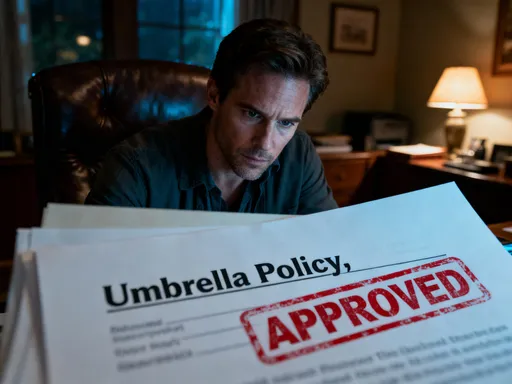
What if the safest bet isn’t in stocks or real estate—but in protection? I used to ignore accident insurance, thinking it was just another bill. Then life threw a curveball. After a sudden injury left me sidelined, I realized this quiet policy did more than cover bills—it protected my earning power. Now I see it differently: not just safety net, but a strategic piece of my financial puzzle. Let me show you how rethinking risk changed everything.
The Hidden Flaw in Traditional Investing
Most financial advice centers on growing wealth—maximizing returns, diversifying portfolios, and timing markets. Yet, there’s a critical gap in this logic: it assumes your income will remain uninterrupted. The truth is, the greatest threat to long-term wealth isn’t a market downturn—it’s the sudden loss of your ability to earn. A car accident, a fall down the stairs, or even a sports injury can halt your income overnight. Unlike market volatility, which tends to average out over time, a disabling accident can have immediate and irreversible financial consequences. Consider this: the average American household saves about $6,000 annually. A serious injury that sidelines someone for three months could erase two years’ worth of savings in lost wages alone, not counting medical costs.
Traditional investing strategies often overlook human capital—the value of your future earnings—as the most significant asset most people possess. For a 35-year-old professional, lifetime earnings could exceed $2 million, far surpassing the value of any home or investment portfolio. Yet, while people insure homes, cars, and even smartphones, they rarely protect their income-generating capacity with the same diligence. This imbalance creates a dangerous financial vulnerability. Imagine building a beautiful house on an unstable foundation. No matter how impressive the structure, it remains at risk. In the same way, wealth built without income protection is inherently fragile. When health fails, the entire financial plan can collapse—not because of poor investments, but because the engine driving those investments has stalled.
This blind spot is especially pronounced among middle-income families. They may feel too wealthy for government assistance but not affluent enough to weather a prolonged income loss. A 2023 Federal Reserve report found that 37% of Americans couldn’t cover a $400 emergency without borrowing or selling something. For families with mortgages, children, and college funds, the stakes are even higher. The solution isn’t simply to save more—it’s to protect what you already have. Accident insurance fills this role by providing a financial buffer that preserves your earning timeline. It ensures that a single event doesn’t derail decades of disciplined saving and investing. In this light, accident insurance isn’t an expense—it’s a form of risk-adjusted growth, safeguarding the very source of your financial momentum.
Accident Insurance Isn’t Just for Emergencies
Many people view accident insurance as a last-resort safety net, useful only when something goes terribly wrong. But this perspective underestimates its real value. Unlike health insurance, which covers medical expenses, accident insurance provides direct cash benefits that can be used however the policyholder chooses. This flexibility transforms it from a reactive tool into a proactive financial instrument. When an injury prevents someone from working, the cash payout can replace lost income, pay the mortgage, cover childcare, or even maintain contributions to retirement accounts. In essence, it acts like a personal income insurance policy—one that doesn’t depend on government programs or employer goodwill.
Consider a common scenario: a teacher breaks her wrist during a weekend hike. Surgery is covered by health insurance, but she’s unable to write on the board or manage classroom duties for six weeks. Her employer offers no short-term disability, and she’s not eligible for workers’ compensation since the injury occurred off the job. Without accident insurance, she faces a $3,000 income gap. With it, a lump-sum benefit of $5,000 bridges the shortfall, allowing her to focus on recovery without financial panic. This isn’t just about survival—it’s about stability. By preventing the need to dip into emergency savings or take on credit card debt, accident insurance protects long-term financial goals from being derailed by short-term disruptions.
Modern accident policies also include valuable riders that enhance their utility. Disability income riders, for example, provide ongoing monthly payments if an injury leads to extended work absence. Critical accident coverage offers larger payouts for specific events like fractures, burns, or loss of limb function. Some plans even include wellness benefits, such as gym membership reimbursements or preventive care incentives, encouraging healthier lifestyles that reduce risk in the first place. These features make accident insurance more than a claim-based product—it becomes a dynamic component of financial health. When structured wisely, it functions like a silent partner in your financial life, stepping in when you need it most and stepping back when things go smoothly.
How I Started Seeing Protection as Growth
My shift in mindset began not from a financial book, but from a personal wake-up call. A close friend, a self-employed graphic designer, slipped on ice and fractured her shoulder. The injury required surgery and months of physical therapy. While her health insurance covered the hospital bills, she lost over $18,000 in income during her recovery. With no passive income streams and limited savings, she was forced to sell part of her investment portfolio at a loss to cover living expenses. That decision didn’t just hurt her short-term budget—it altered her retirement timeline by years. Watching her struggle made me realize that wealth isn’t just about accumulation; it’s about continuity. Protection isn’t the opposite of growth—it’s its foundation.
That experience prompted me to reevaluate my own financial strategy. I had always prioritized investment returns, tracking my portfolio’s performance monthly. But I had never quantified the risk of income disruption. After running the numbers, I realized that a six-month work stoppage at my current income level would create a $24,000 gap. My emergency fund could cover half of that. The rest would require either debt or asset liquidation—both of which carry long-term costs. I decided to allocate a portion of my risk management budget to a comprehensive accident insurance policy. The premium was modest—less than $50 per month—but the peace of mind was immediate.
Within a year, the policy paid off. I suffered a knee injury during a family camping trip, requiring arthroscopic surgery and four weeks off work. The accident insurance provided a $7,500 lump-sum benefit, which I used to cover lost wages and transportation to physical therapy. Because I didn’t have to touch my savings or investments, my long-term financial trajectory remained intact. More importantly, I avoided the stress of financial uncertainty during recovery. This experience reinforced a crucial insight: financial resilience isn’t measured by how much you earn, but by how well you protect what you earn. By treating protection as a growth enabler, I turned a defensive expense into a strategic advantage. The money I didn’t lose was just as valuable as the money I gained.
Picking the Right Policy: What Actually Matters
Not all accident insurance policies are created equal, and choosing the right one requires careful evaluation. The first factor to consider is coverage breadth. Some plans only pay out for hospitalizations, while others include benefits for outpatient treatments, emergency room visits, and even ambulance rides. A comprehensive policy should cover a wide range of accidental injuries—not just major traumas, but common incidents like sprains, lacerations, and concussions. Look for plans that define “accident” broadly and exclude as few scenarios as possible. For instance, injuries during recreational activities or while traveling should be included, not automatically disqualified.
Waiting periods and benefit duration are also critical. A policy with a 30-day waiting period may not help someone who can’t work for only three weeks. Similarly, a plan that limits payouts to 90 days may fall short for more serious injuries. Opt for policies with short or no waiting periods and flexible benefit durations that align with typical recovery timelines. Equally important are exclusions. Some policies exclude pre-existing conditions, high-risk hobbies, or injuries sustained while under the influence. While these limitations are standard, they should be clearly disclosed and reasonable in scope.
Portability is another key feature. Unlike employer-sponsored benefits, which vanish when you change jobs, a personal accident insurance policy stays with you. This ensures continuous coverage regardless of employment status. Compare standalone policies with riders attached to health or life insurance. Standalone plans often offer more generous benefits and greater transparency, while bundled riders may have lower payouts and more restrictions. Finally, assess the claims process. A policy is only as good as its payout efficiency. Look for insurers with a reputation for fast, hassle-free claims—ideally with online submission and quick turnaround times. Reading customer reviews and checking third-party ratings can provide valuable insights into real-world performance. The goal isn’t to find the cheapest policy, but the one that delivers the most value when it matters most.
Integrating Accident Coverage Into Your Portfolio
Financial planning should be holistic, balancing growth, liquidity, and protection. Think of your financial life as a three-legged stool: one leg is investments, another is savings, and the third is insurance. Remove any leg, and the whole structure wobbles. Accident insurance plays a vital role in this balance, acting as a financial immune system. Just as the body’s immune system doesn’t generate energy but protects the systems that do, accident insurance doesn’t produce returns—but it defends the income that fuels all other financial activities.
Allocating a small portion of your budget to accident coverage enhances overall portfolio resilience. For example, spending $600 annually on a policy that provides $50,000 in potential benefits represents a high risk-adjusted return. It’s not about yield—it’s about risk mitigation. This approach mirrors the logic of diversification: you don’t put all your money in one stock, so why put all your financial security in uninterrupted health? By layering protection into your financial plan, you reduce dependence on emergency funds, which can be depleted by a single event, and avoid high-interest debt that can spiral out of control.
Moreover, accident insurance complements other forms of coverage. Health insurance covers medical costs, disability insurance replaces income after a certain waiting period, and life insurance protects dependents after death. Accident insurance fills the gaps between them—providing immediate cash for non-hospitalized injuries, covering expenses before long-term disability kicks in, and supporting non-medical needs like home modifications or transportation. When integrated thoughtfully, it creates a cohesive safety net that adapts to real-life disruptions. This layered approach doesn’t guarantee against hardship, but it significantly improves your ability to absorb shocks without derailing long-term goals. In this way, protection becomes a silent partner in wealth creation, enabling you to take calculated risks in investing because you know your baseline security is strong.
Common Mistakes That Undermine Your Safety Net
Even well-intentioned people make errors that weaken their financial defenses. One of the most common is assuming employer-provided benefits are sufficient. Many companies offer group accident insurance, but these plans often have low coverage limits and lack portability. If you leave your job, the policy may not continue. Additionally, employer plans typically don’t allow customization, so you might be over-insured in some areas and under-insured in others. Relying solely on workplace coverage is like using a bicycle lock to protect a luxury car—it offers some security, but not enough for the asset at risk.
Another mistake is confusing health insurance with accident insurance. Health insurance pays doctors and hospitals, but it doesn’t replace lost income. A family might have excellent medical coverage yet still face financial ruin if the primary earner can’t work for months. Similarly, some people assume that workers’ compensation will cover all job-related injuries, but it rarely applies to off-the-job accidents, which account for the majority of disabling events. A 2022 Bureau of Labor Statistics report found that only 30% of non-fatal workplace injuries resulted in missed workdays—meaning most income disruptions happen outside of work hours.
Overlooking non-work activities is another gap. People who hike, cycle, or play sports assume they’re healthy and therefore low-risk, but these activities actually increase exposure to accidental injury. Parents helping with school events, volunteers at community centers, or even someone rearranging furniture at home can suffer disabling accidents. A comprehensive protection strategy accounts for lifestyle, not just occupation. Finally, failing to review policies annually leads to outdated coverage. As income, family size, or financial obligations change, so should your insurance needs. A policy that made sense five years ago may now leave you dangerously exposed. Regular assessment ensures your safety net evolves with your life.
Building a Smarter Defense: My Step-by-Step Approach
Creating a resilient financial plan doesn’t require complexity—just consistency and clarity. My approach starts with evaluating personal risk exposure. I ask: What is my household’s monthly income dependency? How much would we lose if I couldn’t work for 30, 60, or 90 days? What are my most likely accident risks based on lifestyle—driving, travel, physical activity? This assessment helps determine the right level of coverage. A common rule of thumb is to aim for a benefit that replaces 60–80% of gross income for a minimum of six months, though individual needs vary.
The next step is calculating needed coverage. I review existing protections—employer benefits, health insurance, emergency savings—and identify gaps. If my savings can cover three months of expenses, I look for a policy that bridges the next three to six months. I also consider non-income needs, such as travel to treatment centers or home care assistance, which may not be covered elsewhere. Once I have a target, I compare multiple policies from reputable insurers, focusing on benefit amounts, exclusions, and claims history rather than just premium cost.
After selecting a policy, I integrate it into my annual financial review. Every year, I reassess my coverage in light of income changes, family growth, or new activities. If I take up skiing or start a side business, I adjust my policy accordingly. I also confirm that beneficiaries are up to date and that documentation is easily accessible to my family. This ongoing process ensures that protection remains relevant and effective.
Ultimately, strong risk control isn’t about fear—it’s about freedom. When you know your income is protected, you can invest with greater confidence, pursue career opportunities, and plan for the future without constant worry. True wealth isn’t just the number in your account; it’s the peace of mind that comes from knowing you’re prepared for life’s unexpected turns. By treating accident insurance not as an afterthought, but as a strategic financial tool, you build a foundation where growth isn’t just possible—it’s sustainable. In the quiet reliability of protection, I’ve found one of the most powerful forms of financial leverage available to ordinary families. It doesn’t promise riches, but it preserves them. And sometimes, that’s exactly what smart investing looks like.